
10% Off for New Customers: WELCOME10
GLP-1 Medications: Complete Guide to GLP-1 Receptor Agonists (2026)
GLP-1 medications are prescription drugs that mimic the hormone glucagon-like peptide-1 to improve blood sugar control and reduce appetite. They are widely used to treat type 2 diabetes and obesity. Originally developed for type 2 diabetes, these drugs have become one of the most prescribed medication classes in the United States, driven by their effectiveness for blood sugar control, weight loss, and cardiovascular protection.
This guide covers every FDA-approved GLP-1 drug available in 2026, how they compare, what they cost, and what’s coming next in the pipeline.
How GLP-1 Medications Work
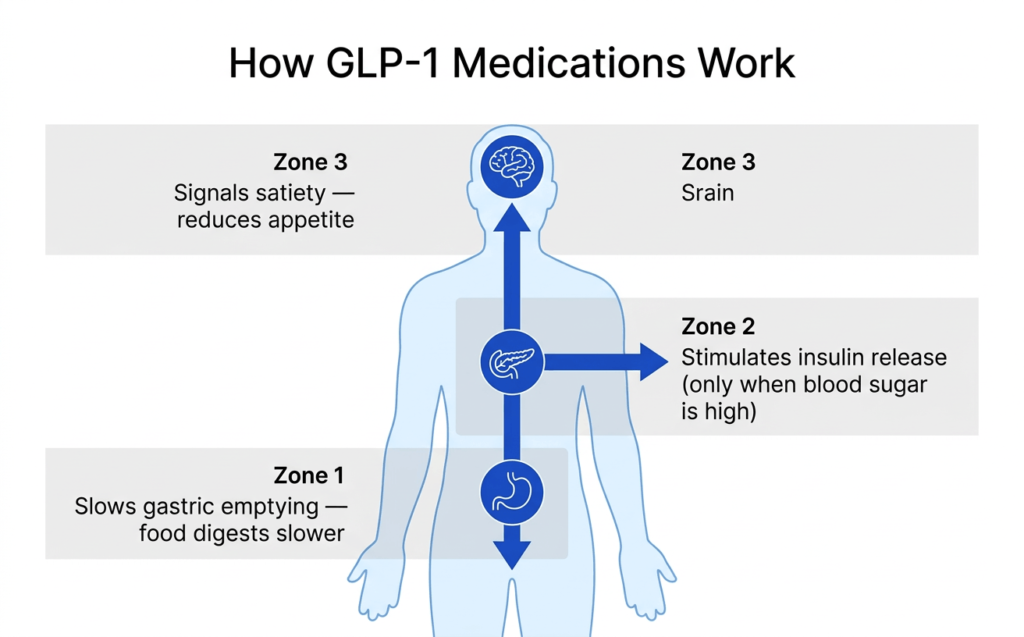
When you eat, your intestines release GLP-1 naturally. This hormone:
- Stimulates insulin secretion from the pancreas (glucose-dependent — only when blood sugar is elevated)
- Suppresses glucagon — preventing the liver from releasing stored glucose
- Slows gastric emptying — food leaves the stomach more slowly, reducing post-meal glucose spikes
- Signals satiety in the brain — reducing appetite and caloric intake
- GLP-1 receptor agonist drugs bind to the same receptors as natural GLP-1, but last far longer — from 24 hours (daily injections like Victoza) to one week (Ozempic) or even taken as a daily pill (Rybelsus).
Complete List of FDA-Approved GLP-1 Medications (2026)
| Drug (Generic) | Brand | Format | Frequency | FDA Indications | Avg. Weight Loss |
|---|---|---|---|---|---|
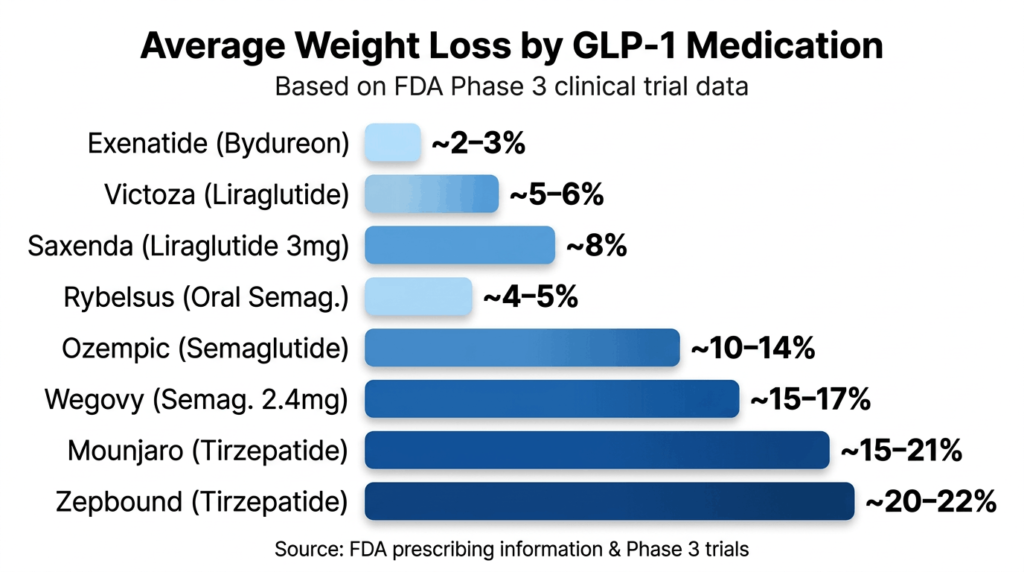
| Liraglutide | Victoza | Injection pen | Daily | T2D, CV risk reduction | ~5–6% |
| Liraglutide 3mg | Saxenda | Injection pen | Daily | Obesity (BMI ≥30) | ~8% |
| Semaglutide | Ozempic | Injection pen | Weekly | T2D, CV risk reduction | ~10–14% |
| Semaglutide 2.4mg | Wegovy | Injection pen | Weekly | Obesity, CV risk reduction | ~15–17% |
| Oral semaglutide | Rybelsus | Oral tablet | Daily | T2D | ~4–5% |
| Tirzepatide (GLP-1/GIP) | Mounjaro | Injection pen | Weekly | T2D | ~15–21% |
| Tirzepatide (GLP-1/GIP) | Zepbound | Injection pen | Weekly | Obesity, sleep apnea | ~20–22% |
| Dulaglutide | Trulicity | Injection pen | Weekly | T2D, CV risk reduction | ~3% |
| Exenatide ER | Bydureon BCise | Injection | Weekly | T2D | ~2–3% |
Tirzepatide (Mounjaro/Zepbound) is a dual GIP/GLP-1 agonist — technically not a pure GLP-1 drug, but clinically grouped in the same class due to mechanism overlap and similar prescribing patterns.
GLP-1 medications currently available through our pharmacy include:
We currently carry two GLP-1 options for patients managing type 2 diabetes:
Victoza (Liraglutide Injection)
Victoza is a once-daily injection that was the first GLP-1 approved for cardiovascular risk reduction (LEADER trial, 2016). It reduces A1C by 1–1.5% and carries a well-established 15+ year safety record.
- Indications: Type 2 diabetes, CV risk reduction in T2D patients with heart disease
- Doses: 0.6 mg (starter) → 1.2 mg → 1.8 mg/day
- Best for: Patients wanting a daily injectable with strong CV data
Rybelsus (Oral Semaglutide Tablet)
Rybelsus is the only oral GLP-1 medication currently available. It contains the same active molecule as Ozempic (semaglutide), but in tablet form — a significant advantage for patients who prefer to avoid injections.
- Indications: Type 2 diabetes management
- Doses: 3 mg (starter, 30 days) → 7 mg → 14 mg
- Critical dosing note: Take on an empty stomach with no more than 4 oz (120 mL) of plain water, at least 30 minutes before the first food, drink, or other medications of the day. Bioavailability drops to near zero if taken with food.
- Best for: Injection-averse patients, those new to GLP-1 therapy
GLP-1 Medications for Weight Loss
While GLP-1 drugs were originally designed for diabetes, weight loss emerged as a major secondary effect in clinical trials — and for some agents, the primary FDA-approved indication.
| Drug | FDA Weight Loss Approval? | Average Weight Loss in Trials |
|---|---|---|
| Wegovy (semaglutide 2.4mg) | ✅ Yes (2021) | 14.9% (STEP 1 trial) |
| Zepbound (tirzepatide 10/15mg) | ✅ Yes (2023) | 20.9–22.5% (SURMOUNT-1) |
| Saxenda (liraglutide 3mg) | ✅ Yes (2014) | 8% |
| Ozempic (semaglutide 1mg/2mg) | ❌ No (T2D only) | ~10–14% (off-label) |
| Rybelsus | ❌ No (T2D only) | ~4–5% |
| Victoza | ❌ No (T2D only) | ~3–6% |
Note on off-label use: Ozempic is widely prescribed off-label for weight loss in people without diabetes. This is legal practice in the US, but Ozempic is not FDA-approved for obesity. Wegovy (same molecule, higher dose) is the FDA-approved formulation for weight management.
Cardiovascular Benefits of GLP-1 Medications
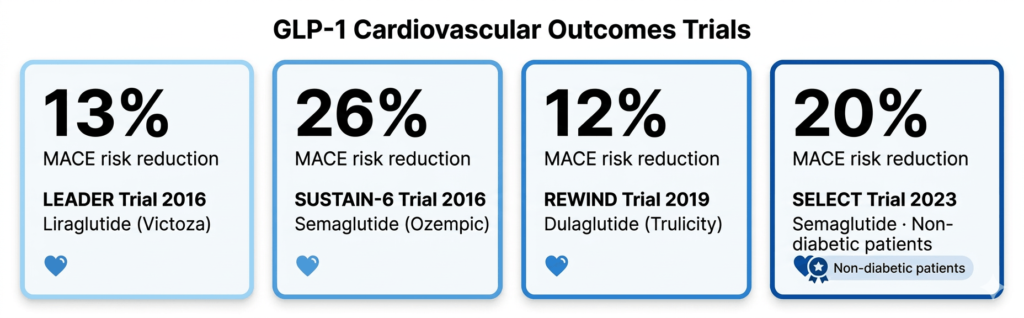
Multiple large-scale cardiovascular outcome trials (CVOTs) have demonstrated that certain GLP-1 drugs reduce the risk of major adverse cardiac events (MACE) in high-risk patients:
| Trial | Drug | Reduction in MACE |
|---|---|---|
| LEADER (2016) | Liraglutide (Victoza) | 13% relative risk reduction |
| SUSTAIN-6 (2016) | Semaglutide (Ozempic) | 26% relative risk reduction |
| REWIND (2019) | Dulaglutide (Trulicity) | 12% relative risk reduction |
| SELECT (2023) | Semaglutide (Wegovy) | 20% reduction in MACE (non-diabetic obese patients) |
The SELECT trial result is particularly significant: it was the first to show cardiovascular protection from a weight loss drug in patients without diabetes — expanding the potential use of semaglutide far beyond its original indication.
What’s New in GLP-1 Medications in 2026
Oral GLP-1 Revolution
The biggest shift in 2026 is the expansion of oral GLP-1 options. Rybelsus (oral semaglutide) has been available since 2019 for type 2 diabetes. The first oral semaglutide formulation approved specifically for obesity was cleared by the FDA in late 2025, expected to reach pharmacies in Q2 2026. Eli Lilly is simultaneously running Phase 3 trials for oral tirzepatide.
This shift from weekly injections to daily pills is expected to dramatically expand the patient population using GLP-1 therapy.
Retatrutide: The “Triple G” Drug
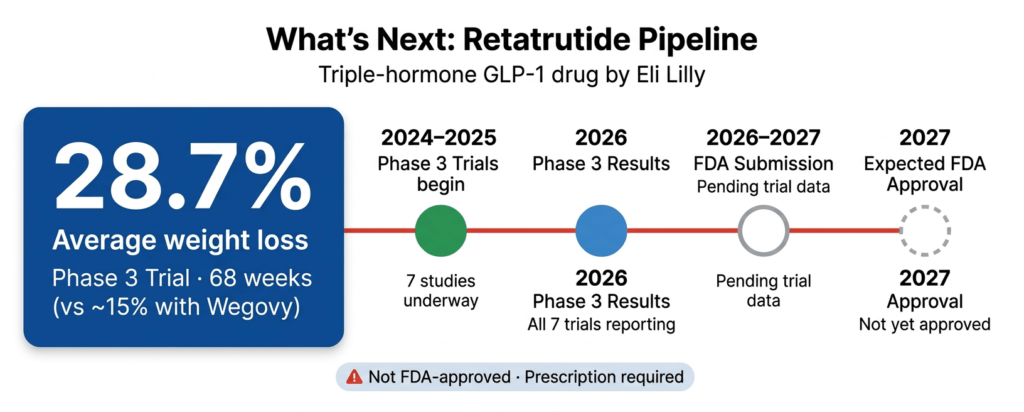
The most-watched drug in the GLP-1 pipeline is retatrutide (Eli Lilly), which activates three hormone receptors simultaneously: GLP-1, GIP, and glucagon. In Phase 3 trials, the highest dose produced 28.7% average weight loss at 68 weeks — nearly double what semaglutide achieves. Seven additional Phase 3 trial results are expected through 2026, with potential FDA submission in 2027.
Retatrutide is not FDA-approved and not legally available for prescription as of March 2026.
FDA Crackdown on Compounded GLP-1s
In February 2026, the FDA announced enforcement action against telehealth companies and compounding pharmacies marketing non-FDA-approved GLP-1 formulations. Semaglutide was removed from the FDA drug shortage list (February 21, 2026), eliminating the legal basis for compounding. Patients who relied on compounded semaglutide are transitioning back to branded Ozempic, Wegovy, and Rybelsus.
Common Side Effects of GLP-1 Medications
GLP-1 receptor agonists share a common side effect profile across the class:
Most common (reported in >10% of patients):
- Nausea (most frequent, especially during dose escalation)
- Vomiting
- Diarrhea
- Constipation
- Decreased appetite
Less common but important:
- Injection site reactions (for injectable forms)
- Increased heart rate (5–10 bpm average)
- Headache
- Fatigue
Serious warnings (FDA Boxed Warning):
- Thyroid C-cell tumors — Observed in rodent studies. Contraindicated in patients with personal or family history of medullary thyroid carcinoma (MTC) or Multiple Endocrine Neoplasia syndrome type 2 (MEN 2).
- Pancreatitis — Discontinue if suspected.
Most gastrointestinal side effects are dose-dependent and transient, typically resolving within 4–8 weeks as the body adapts. Starting with the lowest dose and titrating slowly significantly reduces GI side effects.
GLP-1 Medications Cost & How to Save
GLP-1 drugs are among the most expensive prescription medications in the US:
| Drug | List Price (US, per month) | With Manufacturer Coupon |
|---|---|---|
| Ozempic 1mg | ~$935 | ~$25 (with insurance) |
| Wegovy 2.4mg | ~$1,350 | ~$0–25 (limited) |
| Rybelsus 14mg | ~$870 | ~$10–25 (with insurance) |
| Victoza 1.8mg | ~$680 | Manufacturer PAP available |
| Mounjaro 15mg | ~$1,069 | ~$25 (with insurance) |
Cost-reduction options:
- Manufacturer savings programs — Novo Nordisk and Eli Lilly offer $0–25/month copay cards for commercially insured patients
- Canadian pharmacy — Licensed Canadian pharmacies offer significantly lower prices for the same brand-name medications
- GoodRx — Discount codes at US retail pharmacies
- Insurance prior authorization — Most insurers require documented A1C levels and prior therapy failure
Frequently Asked Questions
-
What is the difference between Victoza and Ozempic?
Both are GLP-1 receptor agonists that treat type 2 diabetes and reduce cardiovascular risk, but they differ in molecule and dosing frequency. Victoza (liraglutide) is injected once daily; Ozempic (semaglutide) is injected once weekly. Ozempic generally produces greater A1C reduction and weight loss (~10–14% vs ~5–6%). Victoza has a longer clinical history — approved in 2010 vs Ozempic in 2017 — with well-established 15-year safety data from the LEADER cardiovascular outcomes trial.
-
Is Rybelsus the same as Ozempic?
Yes — both contain semaglutide, the same active molecule. The key difference is the delivery method: Ozempic is a weekly subcutaneous injection; Rybelsus is a daily oral tablet. Because oral bioavailability of semaglutide is low (~1%), Rybelsus requires strict dosing conditions — empty stomach, no more than 4 oz (120 mL) of plain water, at least 30 minutes before the first food or drink of the day. Weight loss with Rybelsus (~4–5%) is typically less than with injectable Ozempic (~10–14%).
-
Can you take GLP-1 medications without diabetes?
Wegovy (semaglutide 2.4 mg) and Zepbound (tirzepatide) are FDA-approved for obesity in people without diabetes. Saxenda (liraglutide 3 mg) is also approved for chronic weight management. Ozempic, Rybelsus, and Victoza are approved only for type 2 diabetes — prescribing them for weight loss in non-diabetic patients is legal off-label practice, but insurance coverage for that indication is unlikely.
-
How long does it take for GLP-1 medications to work?
Blood sugar improvement typically begins within the first 1–2 weeks. Meaningful weight loss usually appears by week 8–12. Maximum glycemic and weight effects develop over 4–6 months as doses are titrated upward according to the prescribing schedule. GLP-1 drugs are not fast-acting — benefits are cumulative and require consistent, uninterrupted use.
-
What happens when you stop taking a GLP-1 medication?
Most patients regain approximately two-thirds of lost weight within one year of stopping GLP-1 therapy, based on the STEP 4 trial withdrawal data. Blood sugar levels also return toward pre-treatment baseline. GLP-1 drugs treat but do not cure diabetes or obesity — they require ongoing use to maintain benefits. Always consult your prescriber before discontinuing.
-
What are the most common side effects of GLP-1 medications?
The most common side effects across all GLP-1 receptor agonists are nausea, vomiting, diarrhea, and constipation — typically occurring during the dose escalation period and resolving within 4–8 weeks. Starting at the lowest dose and titrating slowly significantly reduces GI side effects. All GLP-1 drugs carry an FDA Boxed Warning regarding thyroid C-cell tumors observed in animal studies; they are contraindicated in patients with a personal or family history of medullary thyroid carcinoma (MTC) or MEN 2.
-
Is oral semaglutide (Rybelsus) as effective as the injection?
For blood sugar control, Rybelsus 14 mg achieves A1C reductions comparable to low-to-moderate doses of injectable semaglutide. For weight loss, injectable formulations are more effective due to higher bioavailability. The PIONEER 7 trial showed Rybelsus 14 mg reduced A1C by ~1.5% and body weight by ~4.4 kg. The primary advantage of Rybelsus is convenience — a daily pill for patients who prefer to avoid injections.
-
How much do GLP-1 medications cost without insurance?
GLP-1 medications are among the most expensive drug classes in the US. Without insurance, monthly list prices range from approximately $680 for Victoza to $870 for Rybelsus and over $1,350 for Wegovy. Cost-reduction options include manufacturer savings cards (typically reducing copay to $0–25/month for insured patients), GoodRx discount codes, and licensed Canadian pharmacies, which often offer the same brand-name medications at significantly lower prices.
Medical Disclaimer
The information on this page is intended for educational purposes only and does not constitute medical advice. GLP-1 medications are prescription drugs — they require evaluation and a prescription from a licensed healthcare provider. Do not start, stop, or change any medication without consulting your doctor or pharmacist. Canadian Health Care Mall dispenses medications only upon presentation of a valid prescription from a licensed prescriber.
Clinical References
-
1
Liraglutide and Cardiovascular Outcomes in Type 2 Diabetes (LEADER). N Engl J Med. 2016;375:311–322.
PMID 27295427 -
2
Semaglutide and Cardiovascular Outcomes in Type 2 Diabetes (SUSTAIN-6). N Engl J Med. 2016;375:1834–1844.
PMID 27633186 -
3
Once-Weekly Semaglutide in Adults with Overweight or Obesity (STEP 1). N Engl J Med. 2021;384:989–1002.
PMID 33567185 -
4
Semaglutide and Cardiovascular Outcomes in Obesity without Diabetes (SELECT). N Engl J Med. 2023;389:2221–2232.
PMID 37952130 -
5
Tirzepatide Once Weekly for the Treatment of Obesity (SURMOUNT-1). N Engl J Med. 2022;387:205–216.
PMID 35658024 -
6
Efficacy, safety and tolerability of oral semaglutide (PIONEER 7). Diabetes Obes Metab. 2019;21:2642–2651.
PMID 31436867 -
7
Victoza (liraglutide) Prescribing Information. Novo Nordisk. Revised 2023.
FDA.gov — Full PI -
8
Rybelsus (semaglutide) Prescribing Information. Novo Nordisk. Revised 2024.
FDA.gov — Full PI